
Kurt Knispel Biography Tank ACE of Aces
20 September 1921–28 April 1945
(29 pictures below biography)
Kurt was born in Salisfeld (Salisov), a small settlement near the town of Zuckmantel in Sudetenland, Czechoslovakia. He spent most of his childhood in nearby Niklasdorf. After completing his apprenticeship in an automobile factory in 1940, Knispel applied to join the armored branch of the German Army.
During the war, he was a German tank ace and ultimately commander, notable for a documented 168 Tiger Tanks destroyed, making him the most successful fighter in WW2 tank battles and German tank warfare. Another 37 kills were shared or unconfirmed.
He did not have the opportunity to write fancy memoirs or serve in the post-war Bundeswehr or do the things soldiers often do to cement their fame. Even though he is the world's leading Panzerkommandant, Kurt is largely forgotten except by dedicated students of the war.
“Kurt Knispel died in a Tiger II, also called Königstiger, in a meaningless confrontation in the middle of nowhere, while the continent was in turmoil. There was no one left to care, and Knispel wound up in an unmarked mass grave with 14 of his comrades. They wrote 'The Fanfare of the Common Man' for the forgotten men like Kurt Knispel. Here, he is remembered, but he represents all the unknown soldiers who fought like lions, bled, died, and were forgotten.”
Something Happened on the Way to the Eastern Front / Ostfront 1941 bis 1945 Erlebnisbericht
Kurt Knispel was his own man. He aggressively intervened on behalf of a Russian prisoner being mistreated by a guard. His commander defended him, but thereafter he was repeatedly denied the medals he rightly deserved.
A note about the Wehrmacht in general: there were two tracks for gaining status—promotions and medals. Rank mattered, of course, but for true recognition—the kind that made ordinary soldiers respect you beyond saluting—the second track was more important. This included mentions in Wehrmacht communiqués, read over the radio to the entire Reich, singling out only a few men each night of the millions serving.
Kurt Knispel was the only non-commissioned officer of the German Panzer arm named in a nationwide Wehrmacht Radio communiqué. Simply holding rank would not earn respect; Kurt Knispel earned admiration through his actions, particularly on the Eastern Front.
Eventually, time ran out. The enemy approached Kurt's homeland, and he was all that stood between them and his family. According to his radio operator, Rudolf Barth, Commander Knispel was severely wounded on 28 April 1945 by shrapnel from a mortar to his head when his Tiger II (Königstiger) was hit in a pitched Panzerkrieg with a swarm of Soviet tanks and artillery. His tank survived under his friend Feldwebel Skoda, who suffered the same fate two hours later. The last two King Tigers were destroyed in the area.
Kurt Knispel died one week before the war ended. At age 23, he died in Wostitz (Vlasatice), 150 miles from his home.
He fought across iconic WW2 Eastern Front battles, including the Kursk 1943 battle, and was active in campaigns spanning Normandy (Caen), Operation Barbarossa, and the broader WW2 campaigns.
Kurt Knispel
Kurt Knispel is credited with 168 confirmed tanks destroyed as Commander/Gunner. Some sources speak of possibly as many as 205 kills. He is credited with knocking out a T-34 at 2000 meters and destroying over 70 enemy anti-tank guns, as well as countless bunkers and field works.
That is Knispel (right) with his tank commander, Hans Fendsack. Fendsack fell in Normandy. Obviously, they were great friends, a friendship forged in blood and steel. After that, Kurt served with Commander Alfred Rubbel. Kurt ultimately became the commander of his own Tiger One Tank and later Tiger Two, also known as the Dragon of War.
Knispel personally acquired a reputation for being uninterested in claiming credit that wasn't certain and gladly deferring to others for kills that likely were his. He was a great guy to have in your outfit.
It is reported that the Tiger Tank crews were the handsomest of the entire army. This, however, could not be confirmed. Regardless, the Tiger Tank crews were, by far, confirmed to be the “best of the best” tankers in the entire army.
Major battles that Kurt Knispel fought in from 1941 to 1945 included the Eastern Front, Kursk Tank Battle, Operation Citadel, Stalingrad, and the Battle of Budapest. His performance cemented his place as a Top Tank Ace and legendary German Tank Ace of WW2.
For more details on his remarkable career in WW2 tank battles, see Kurt Knispel Wikipedia.

The Most Horrific War of All Time: Russia vs. Germany
The war between Germany and the Soviet Union officially began in late June 1941 with Operation Barbarossa, although the threat of conflict had loomed since the early 1930s. Germany and the USSR launched a joint war against Poland in September of 1939, which the Soviets followed up with invasions of Finland, Romania, and the Baltic States over the following year.
After Germany crushed France and determined that it could not easily drive Great Britain from the war, the Wehrmacht turned its attention back to the Eastern Front. Following the conquests of Greece and Yugoslavia in the spring of 1941, Berlin prepared its most ambitious campaign: the destruction of Soviet Russia. The ensuing WW2 conflict would result in a staggering loss of human life and in the final destruction of the Nazi regime.
You can tell that when Kurt Knispel, the Tiger Tank ace, meant business, he meant business.
“As a Tiger I Tank commander, he felt like a fish in water, sometimes even alone, resisting the superior forces of the enemy to give his unit more opportunities for successful advancement or retreat. Alfred Rubbel, one of Knispel’s first commanders, argued that Kurt never abandoned his comrades even in the most difficult situations.”
Loyalty and dedication to those around him were burned into his DNA. In reality, his men had absolute trust in Kurt Knispel, one of the most successful German tank aces in WW2 tank battles.
Panzer 4 (IV) Tank
This was the first Panzer Tank Kurt Knispel was assigned. It was during Operation Barbarossa in June 1941.
For the first time on the Eastern Front, Knispel was there in August 1941. He served as a gunner for Lieutenant Helman on a Panzer IV tank during Operation Barbarossa and participated in the invasion of Soviet territory as part of the Third Panzer Group of the 57th Army Corps commanded by General Adolf-Friedrich Kuntzen. Kurt Knispel took part in WW2 tank battles from Yartsevo to Stalingrad, in the north in the Tikhvin region of the Leningrad area, and also in the Caucasus under the command of Eberhard von Mackensen.
After basic training, Knispel began training in Panzer Tanks Pz I, II, and IV. His skill and courage quickly earned him a reputation as a future Top Tank Ace in WW2 Eastern Front campaigns.


Long-Barreled Panzer 4 (IV)
In a daring evening raid on a sealed “SS” boxcar, Kurt and his tank crew managed to procure 10 (ten) “Viking SS Liberated” Schnapps bottles. They hid them in the long barrel of their newly upgraded Panzer 4 (IV) Tank.
The bottles were considered “armor-piercing” and reportedly boosted morale and the fighting spirit. The bottles and the crew were on their way to the Eastern Front. Subsequently, Kurt's units rescued the aforementioned Viking SS unit after it had become overrun in a fierce Russian counterattack. So it all worked out.
80 percent of all German military casualties occurred on the WW2 Eastern Front. The percentage of Germany's population that perished was 10.8%. Russia's total population losses were 14%. 10 million (58%) of the 17 million German soldiers who fought returned home after the war. The other 42% were simply never heard from again and forgotten.
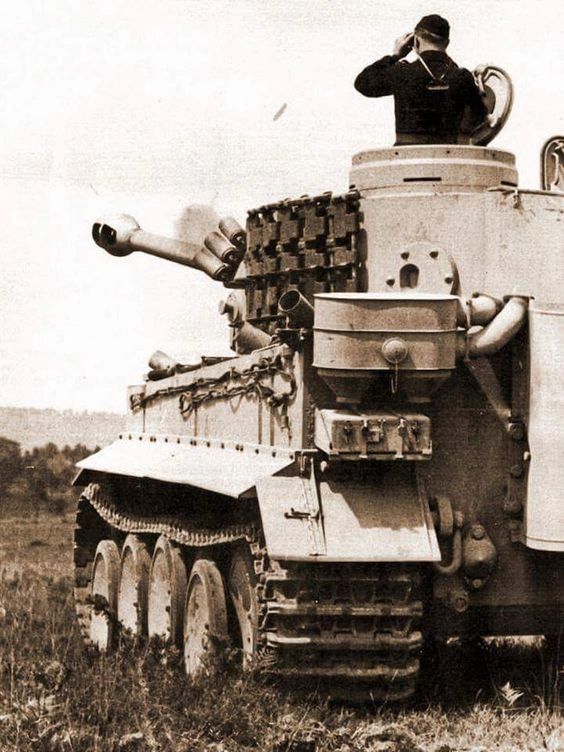
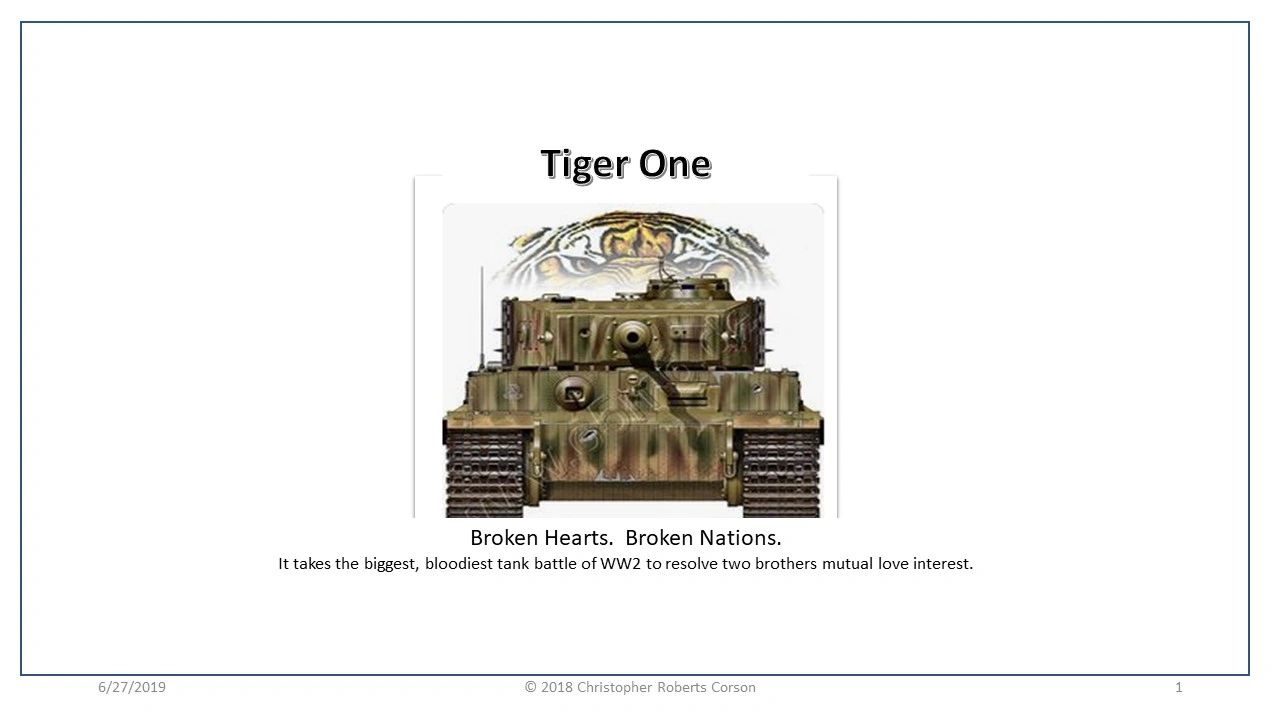
The Tiger One Tank is a German heavy tank of World War 2 that was employed from 1942 in Africa and Europe, usually in independent heavy tank battalions. Its final designation was Panzerkampfwagen VI Tiger Ausf. E, often shortened to Tiger Tank. The Tiger gave the German Army its first armored fighting vehicle that mounted the heavy-duty “88.” 1,347 Tiger Ones were built between August 1942 and August 1944. After August 1944, production of the Tiger I Tank was phased out in favor of the Tiger II / King Tiger.
Most bridges were unable to handle the 54-ton weight of the Tiger Tank, so river crossings like this were often the only option. Tiger One was the first modern tank to be manufactured with underwater crossing capability with rubber seals, an engine, and a rewound cab snorkel. The crew strongly disliked it.
Kurt volunteered once to wade into freezing river water in the Russian winter to make sure the river was not deeper than 3 feet (0.91 m), above which the Panzer 4 (IV) Tank engine would flood. The river was too deep for the crossing. Tiger One was the first mass-produced tank to feature “deep wading” capabilities. They installed a snorkel and had 14 points of sealing before they could cross rivers up to 12 feet (3.66 m) deep.
As the turret is locked down and all the vision slits sealed… this feature was highly unpopular with the crews. Ask front-line soldiers what they fight for, and they'll often say they fight for their mates. Knispel looks quite comfortable and relaxed with his mates. Notice that almost all are clean-shaven with short hair, except him—the excuse that there was no time or hot water with which to shave appeared to extend only to Kurt Knispel, the Top Tank Ace, the man who didn't care about the fuss.
Taking the Tiger Tank for a drive in the country.
Tiger Tank Historical Overview
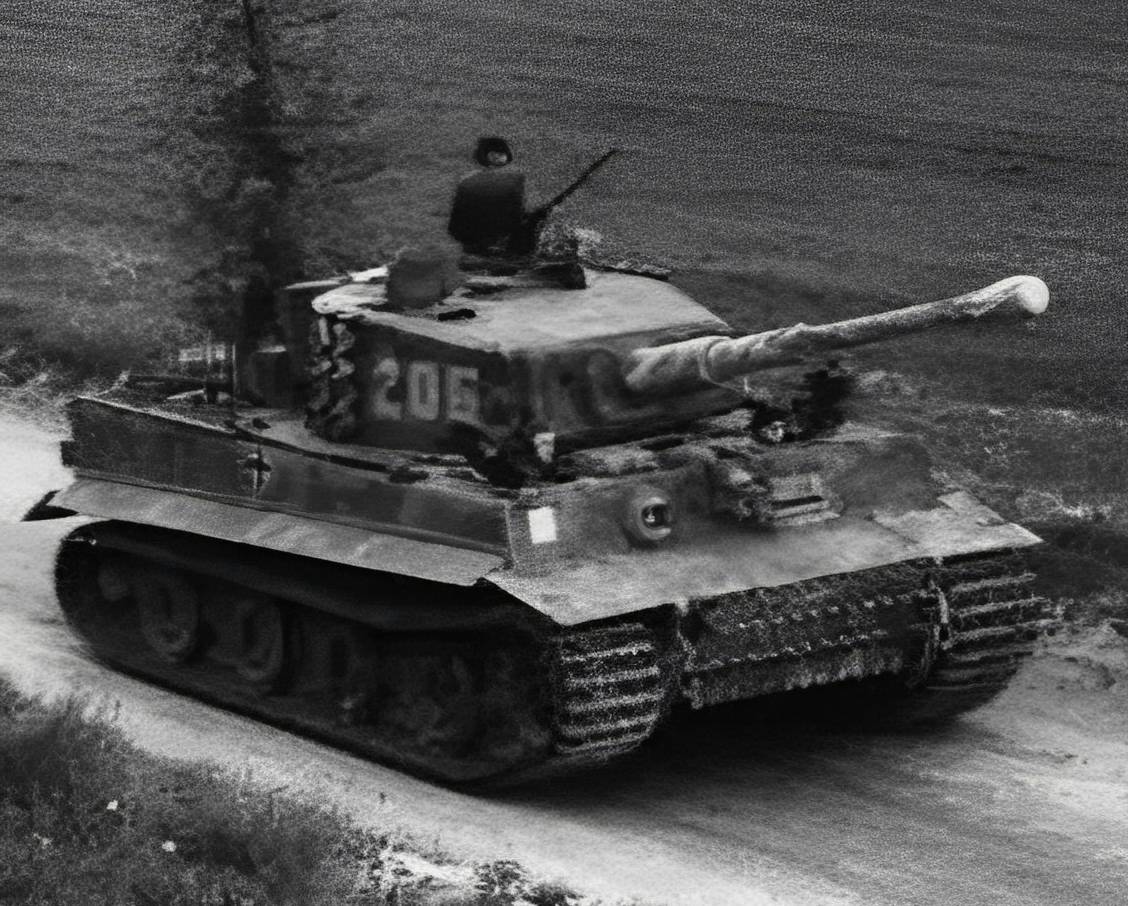
The Tiger One is a German heavy tank of World War II that was employed from 1942 in Africa and Europe, usually in independent heavy tank battalions. Its final designation was Panzerkampfwagen VI Tiger Ausf. E, often shortened to Tiger. The Tiger gave the German Army its first armored fighting vehicle that mounted the heavy-duty “88.” 1,347 Tiger Ones were built between August 1942 and August 1944. After August 1944, production of the Tiger I was phased out in favor of the Tiger II.
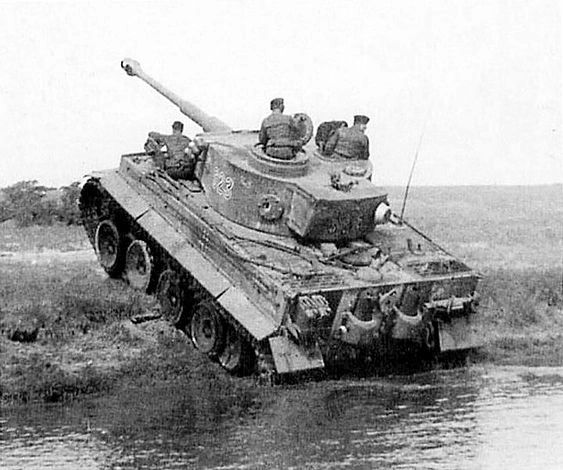
Most bridges were unable to handle the 54-ton weight of Tiger One, so river crossings like this were the only option. Tiger One was the first modern tank to be manufactured with underwater crossing capability with rubber seals, an engine, and a rewound cab snorkel. The crew strongly disliked it.
Kurt volunteered once to wade into freezing river water in the Russian winter to make sure the river was not deeper than 3 feet (0.91 m), above which the Panzer 4 (IV) engine would flood. The river was too deep for the crossing.
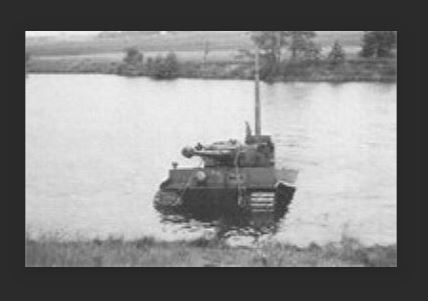
The Tiger One is the first mass-produced tank to feature “deep wading” capabilities. They installed a snorkel and had 14 points of sealing before they could cross the river up to 12 feet (3.66 m) deep.
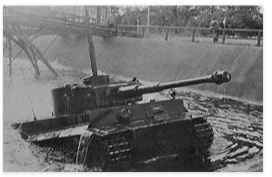
As the turret is locked down and all the vision slits sealed… this feature was highly unpopular with the crews.
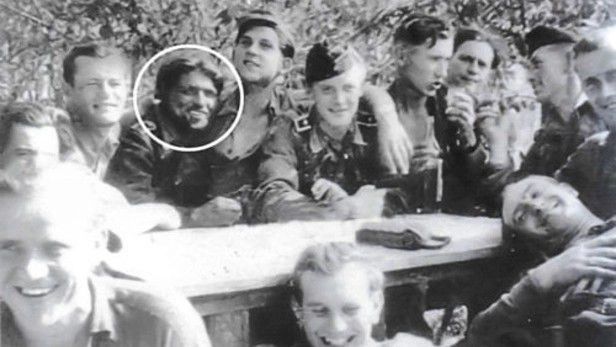
Ask front-line soldiers what they fight for, and they'll often say they fight for their mates. Knispel looks quite comfortable and relaxed with his mates. Notice that almost all are clean-shaven with short hair but him—the excuse that there was no time or hot water with which to shave appeared to extend only to Knispel, the man who didn't care about the fuss.
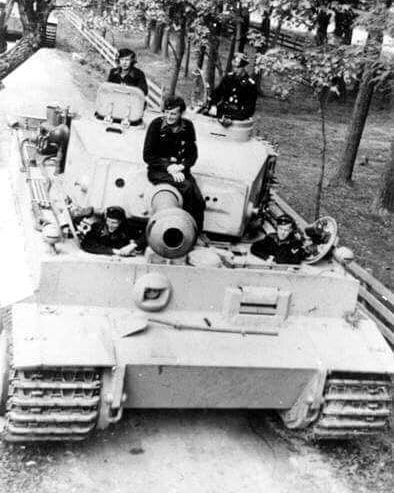
Taking the Tiger for a drive in the country.
Tiger One Panzer Tank
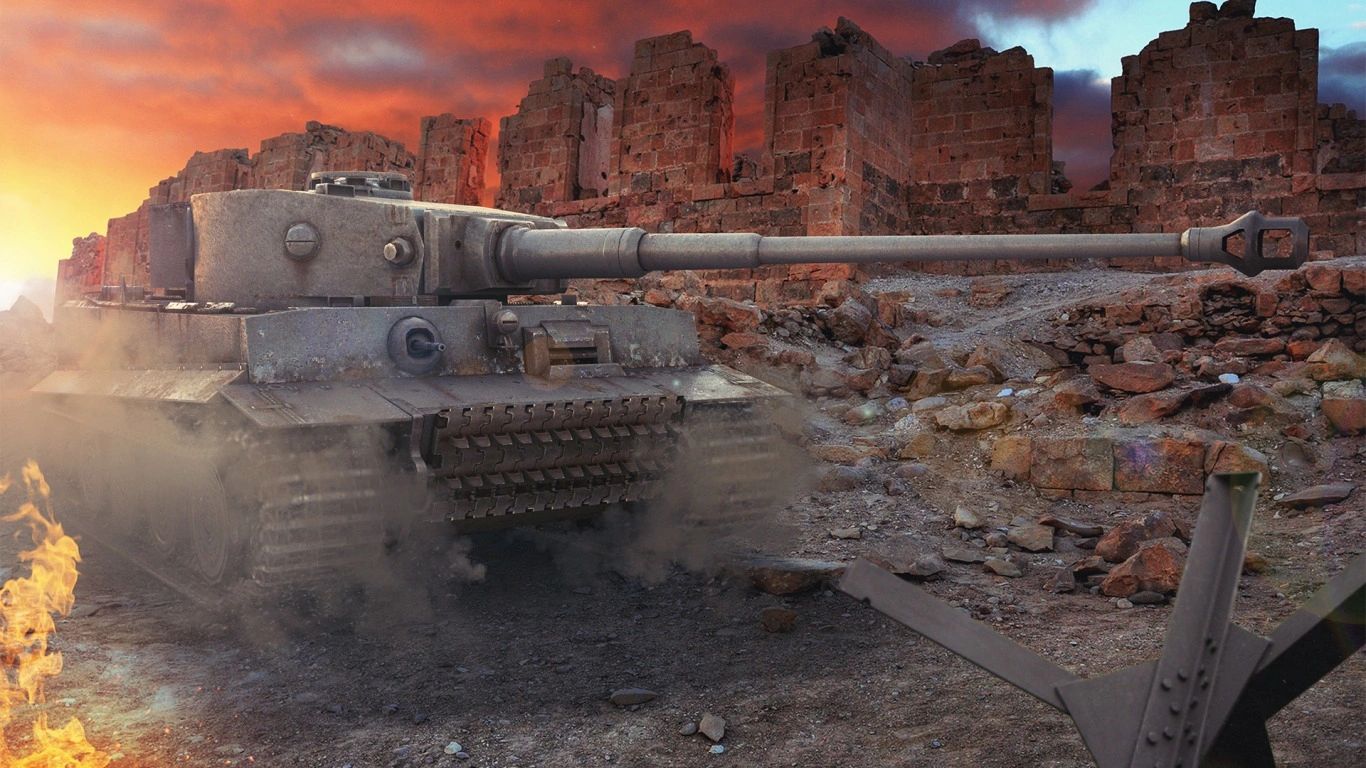
The most renowned (and feared) tank of WW2. So feared, both the Russians and Americans told their tankers NEVER to engage Tigers.
The 503rd Heavy Panzer Division had a 15:1 kill-to-loss ratio. Due to heavy action in the most lethal battles, it also suffered the highest casualty loss in the Panzer army. Kurt served in the 503rd during the famous tank battles at Kursk, Russia.
In the new Tiger One, Kurt was documented to have killed 27 tanks in his four weeks at Kursk in 1943. Both the German and Russian armies had over 80% of their total armor there.
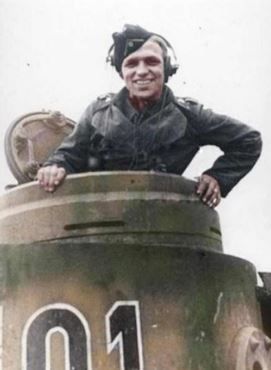
- He is credited with knocking out a Russian T-34 at 2,000 meters (6,500 feet, 18 football fields).
Knispel was the gunner of a Panzer IV under Lt. Hellman during Operation Barbarossa, where he participated in the initial assault as part of Panzergruppe 3, LVII Army Corps (later LVII Panzer Corps), commanded by General Kuntzen. Knispel saw action from Yarzevo to the gates of Stalingrad, in the north around the Leningrad-Tikhvin area, and also in the Caucasus under General von Mackensen. Knispel returned to Putlos at the end of January 1943 and became familiar with the brand-new Tiger I tank. It was Hitler's answer to the T-34, which was superior to the Panzer 4 (IV). By this time, Knispel was already credited with 12 kills in his Panzer 4 (IV).
Knispel’s information is taken from Kurt Knispel.
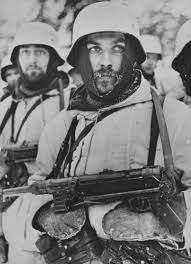
The winter of 1941-42 was the coldest European winter of the 20th century. Kurt is staying hydrated.
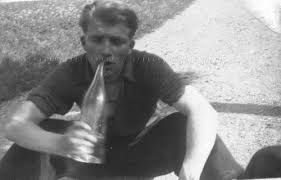
A group of men from Putlos was sent to the 500th Panzer Battalion at Paderborn. These men, led by Oberfeldwebel Hans Fendesack, would become the 1st Company of the 503rd Heavy Panzer Battalion, which fought at Kursk as flank cover for the 7th Panzer Division (Armee Abteilung Kempf).
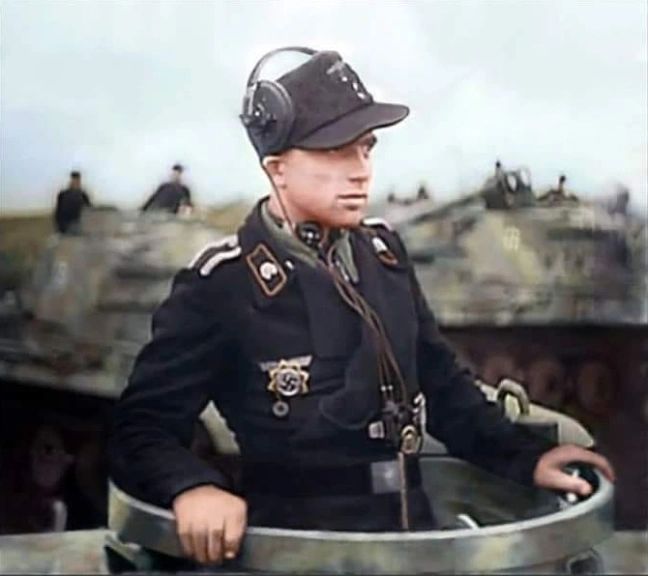
Kurt is all fancy-dressed in factory-fresh Tiger.
A Warrior on the Front
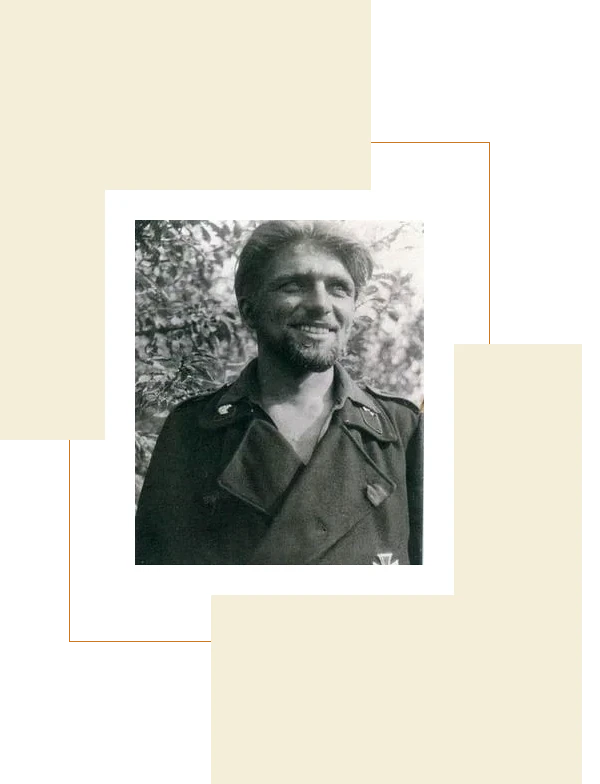
Kurt Knipsel. Likely 1945. From his look, you can tell he had danced with the devil in Russia. He did his duty.
It is estimate that 93% of his kills were in the universally feared Tiger.
For perspective, top Russian tank ace Lavrinenko had 52 tanks.
The top US tank ace (Lafayette G. Pool): 12 tanks.

In real life, Kurt was short. But nobody gave him shit for it. Nobody came close to his combat proficiency. For this, he was truly loved by his comrades in arms. Here Kurt is in the middle (dot over his head). That is the way his comrades showed their appreciation and admiration, which Kurt's superiors never acknowledged because Kurt was his own man.
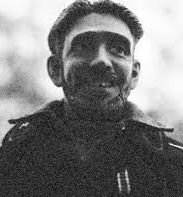
Kurt lets out his beard. By then, he had over 110 kills. He finished with 168 kills (plus another potential 37 “shared” kills). He readily gave kills to other tankers. “There was enough for everyone. They will be making more T-34s for us.”
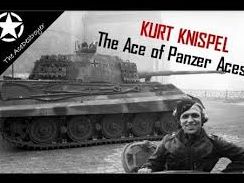
Kurt served in the 503rd Heavy Panzer Battalion. The 503rd and the later Feldherrnhalle heavy tank battalions are credited with the destruction of around 1,700 enemy tanks. The battalion lost 252 Tiger Is, Tiger II's, and also some Panzer IIIs. Of these, 123 (49%) were destroyed by their crews, and 113 (45%) were destroyed by the enemy. The battalion had more tanks put out of action outside combat than due to enemy action. This was a common occurrence in German tank units as a result of the poor reliability of Tiger tanks and the fuel supply problems often suffered by the German army.
The 503rd maintained a kill ratio of 15:1 for combat losses, which was above average for German heavy tank battalions and the second highest for combat losses. The number of tanks claimed as destroyed by the 503rd will exceed the number that were actually destroyed, as a knocked-out tank may be repaired, and two tanks firing on the same target may both claim the “kill,” resulting in that target being counted twice, and some claims have simply been exaggerated. However, there are several examples where claims were found to be entirely accurate when enemy losses were counted, as when German troops held an area after a battle and were able to prevent Soviet forces from recovering their lost vehicles.
503rd information taken from Heavy Panzer Battalion
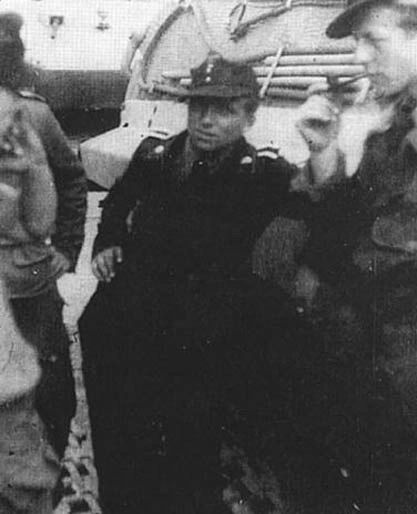
As a tank commander, he (Kurt Knispel) felt like a fish in water, sometimes even alone, resisting the superior forces of the enemy to give his unit more opportunities for successful advancement or retreat. Alfred Rubbel, one of the first commanders of Knispel, argued that Kurt never abandoned his comrades even in the most difficult situations.
And the Tiger Crews were well known to be the handsomest in the whole army,, too!
And the Tiger Crews were well known to be the handsomest in the whole army,, too!
Kurt Knispel's basic training was at Sagan in Lower Silesia, then part of Germany and now part of western Poland not far from the Oder River. After learning the basics of German ordnance, such as the machine gun MG 34 and Pistole, and receiving practical training on Panzer I, II, and IVs, Knispel was accepted on October 1, 1940, mustering into the 3rd Company of the 29th Panzer Regiment, which was serving in the 12th Panzer Division. He trained as a loader and gunner in a Panzer IV, the main German battle tank of the time, until June 11, 1941. This was propitious timing, as shortly after his graduation the Germans were about to begin something big.
